
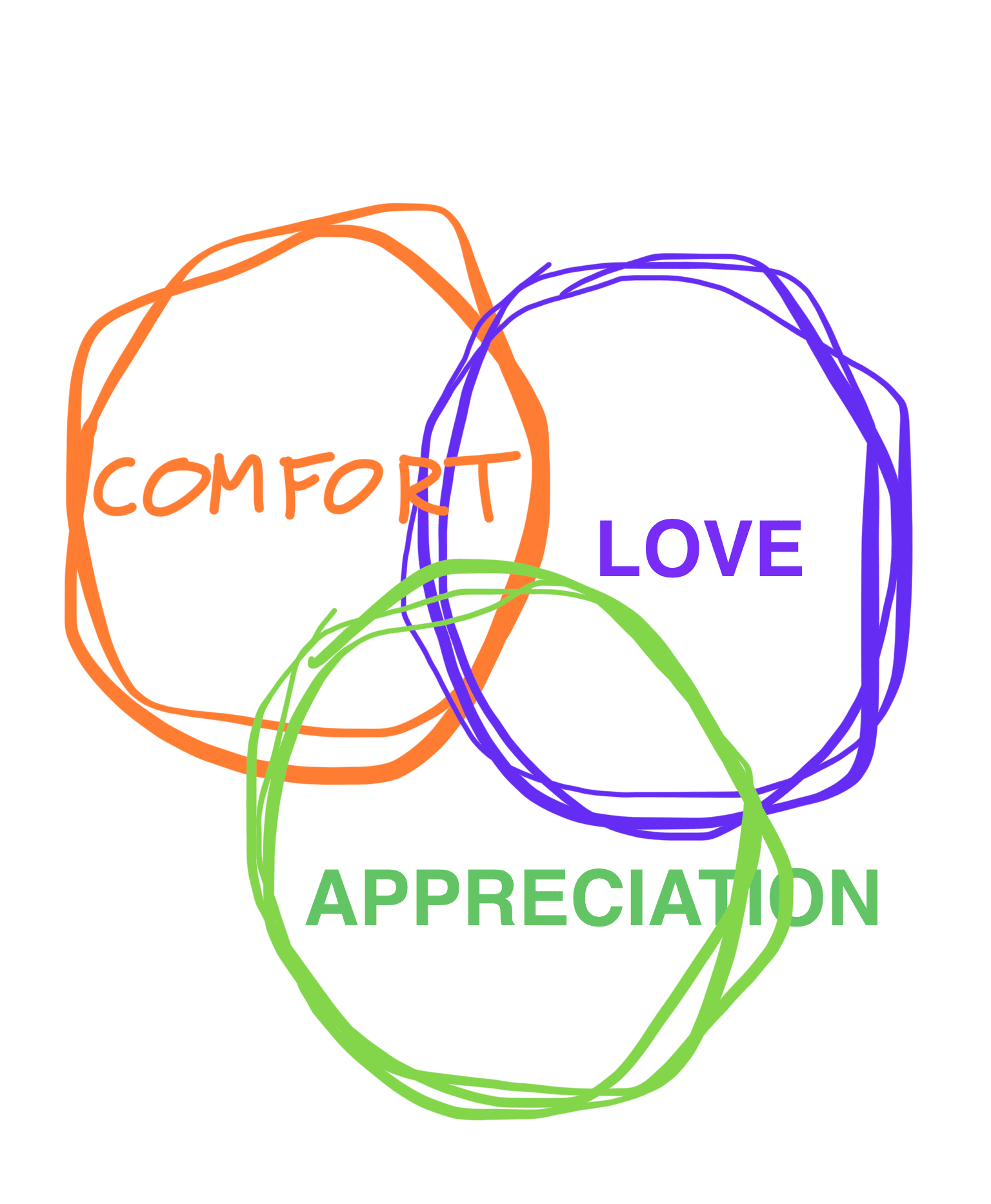
Or maybe a nicer way to say it is that I have needs, you have needs, we all have needs.
Through my blogging here for 26 years or so, I’ve been journaling about my personal life along with sharing an eclectic mix of things that interest me. Meaning, I’m not here blogging about things that a lot of people want to read so I can make money; though I do need money because I have bills to pay. I am not financial independent nor retired.
Recently, I’ve come to recognize a part of my wellness & wholeness is saying out loud that I need love, appreciation, and comfort. These 3 elements overlap significantly, like a venn diagram, yet each has its own distinctions too.
5 Love Languages
Love has been popularized by Gary Chapman’s best-selling book on love languages, which categorizes it into five types: acts of service, receiving gifts, physical touch, quality time, and words of affirmation. These describe how someone experiences love or expresses love. The love languages that touches me most, pun intended, is physical touch, followed by quality time as a close second. Both are the most difficult to give and to get.
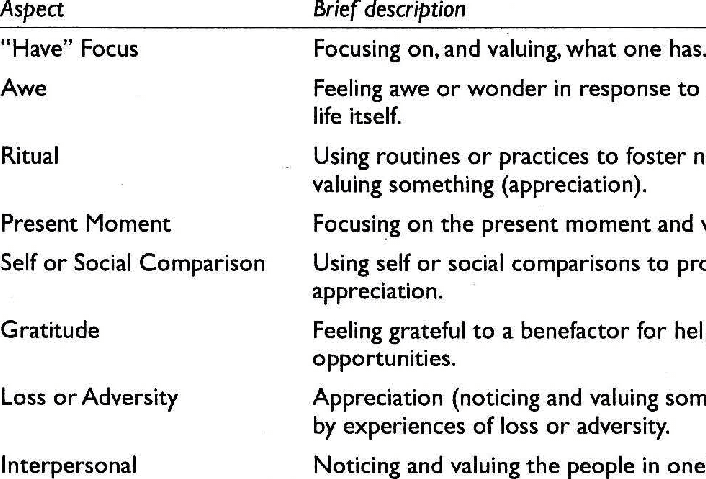
8 Aspects of Appreciation
There’s both feeling appreciation as valuing something or someone; and then there’s feeling appreciated by someone else.
Research by Nancy Fagley at Rutgers has identified that appreciation is the super-ordinate construct that encompasses gratitude, awe, valuing what one has (a “have” focus), interpersonal feelings, response ro ritual, delight in the present moment, social comparison, and experiencing loss. Real appreciativeness has 2 chief characteristics: acknowledging the value and meaning of something or someone, and feeling a positive emotional connection to it.
4 Types of Comfort
Comfort is such a primal and driving force in our lived experiences. According to neuroscience, our amygdala is hardwired to be sensitive to danger and discomfort that it even disables the logical parts of our brain that’s used for cogitating and logical thinking.
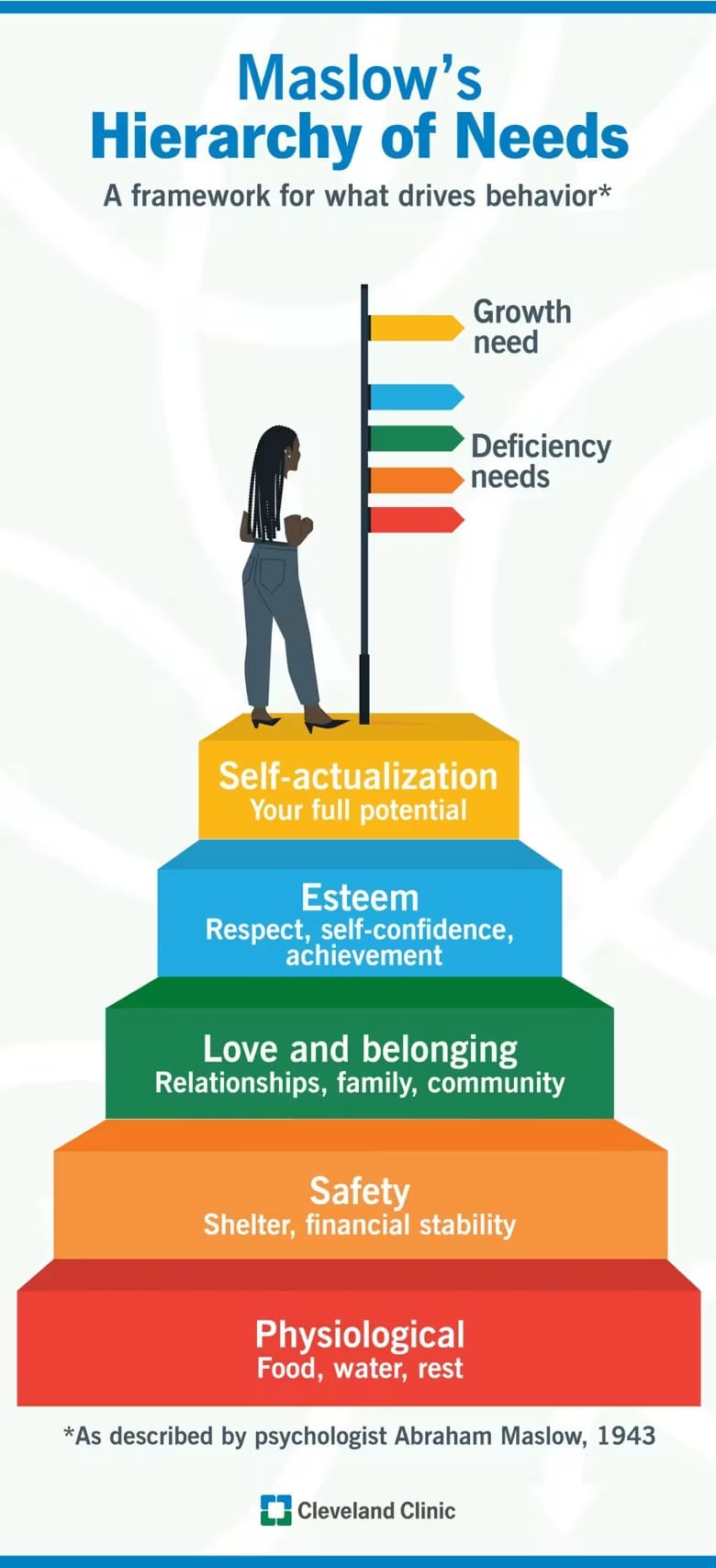
At our core of our being, we need comfort on various levels. Growing up, I (was coaxed to) believe that survival—having shelter, clothing, and doing enough work to pay the bills—was enough for happiness. This maps to the 2 lower levels of Maslow’s hierarchy of needs, physiological and safety.
In the second half of my life, I confess that need more to experience happiness, satisfaction, and well-being. As mentioned already, love, appreciation, and comfort.
This can seem like a luxury, though, since many in the world don’t have their basic needs met. Half the world lacks access to essential health services. And here in the USA, homelessness is at an all-time high, affecting over 750,000+.
(Yet, I don’t think apologizing for what I have or feeling guilty helps anyone. The billionaires & millionaires can do so much more to address wealth inequality.)
There are 4 types of comfort: physical, emotional, psychological, and relational. Each of these are helpful to my sense of a peace of mind. Let me share more about my experiences.
While the need for love and appreciation is out of my control, as it depends on others, I can actively seek comfort. Some of them anyways.
For instance, I feel comforted when my phone rings and it’s a friendly personal call. Unfortunately, more often that not, most of my calls come from a robot or telemarketer or fundraiser.
I’ve also discovered joy in simple comforts, like sitting in a padded chair or rocking in a hammock. Previously, I thought comfort foods was all that I deserved. I recently noticed that Starbucks replaced their hard wood chairs with cushioned chairs and sofas, which makes me happier. Thank you multinational corporation SBUX.
To round it out and wrap this up, it’s comforting to be in a room with an ambient temperature in the 70s, during summer or winter; or outdoors when the weather is comfortable, sunny & not raining or snowing. And, to have psychological safety sure eliminates my hypervigilance of editing every word or thought before expressing one.
a Spirituality that Meets All Needs?
As humans live in this imperfect world with wealth inequality, lack of opportunities, diseases, deformities, natural disasters, dictatorships, and other ills, tangible real-life comfort is out of reach for too many. All that’s been true for all of human history.
Some say that these needs for love, appreciation, and comfort, can ultimately only come from God. To a degree, that is an existential truth for those who believe. And, even for those who believe as such, much of that love, appreciation, and comfort is experienced when it comes from real human people made in the image of God.
• Excerpt from The Hour That Changed the World, by Dick Eastman–
As E. M. Bounds reminds us, “Prayer is the language of a man burdened with a sense of need. Not to pray is not only to declare that there is nothing needed, but to admit to a non-realization of that need.”
In a practical sense, petition is not the prayer of a man opening heaven’s doors to release God’s power. Rather, it is man opening his heart’s door to receive power already appropriated by God. Expressed helplessness is the key to opening that door, thus giving God access to our need. We must define the need.